
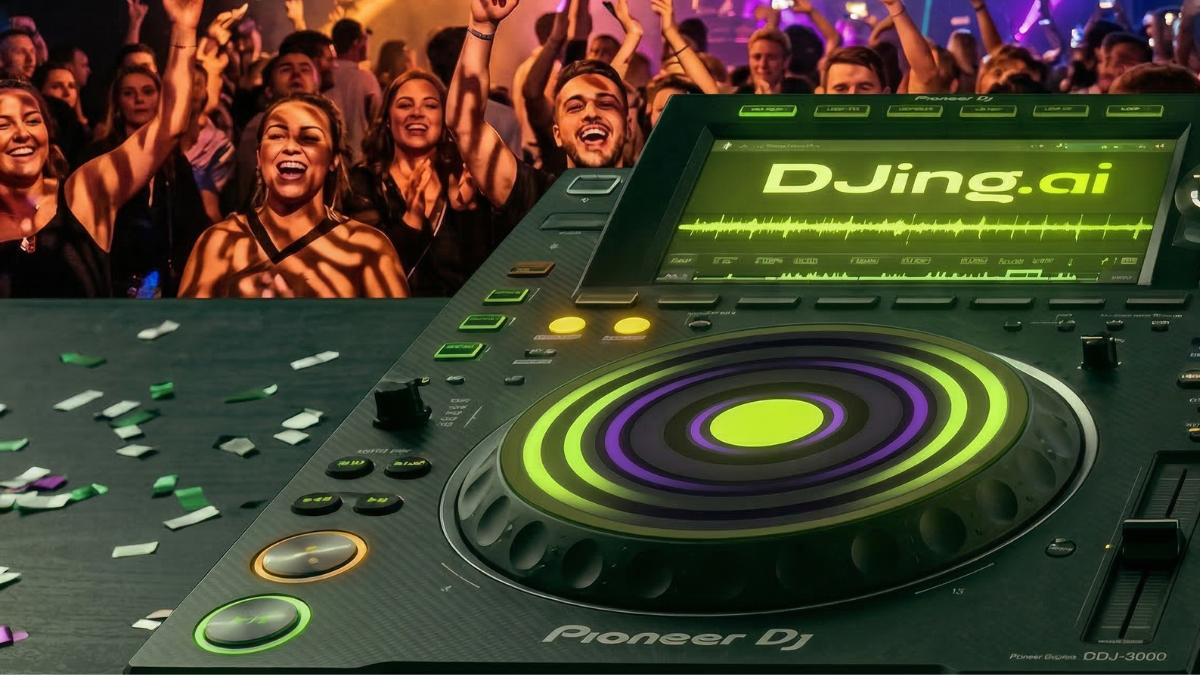
Forget everything you thought you knew about AI DJing if you’re still stuck on beatmatching. Seriously. That’s so 2023. We’re in 2026 now, and the machines? They are doing things that blow my mind every single time I fire up my setup. We are way, way beyond just aligning tempos. If you’ve been curious about what AI can truly do for your mixes, you absolutely have to check out The Dawn of AI DJing: An Introduction, but come back here, because this is where the real fun starts. Are the advanced AI techniques available today? They redefine what ‘DJing’ even means. It’s not just about blending songs anymore; it’s about composing an experience on the fly.
When I first dipped my toes into AI DJing a few years back, I admit, I was skeptical. I loved the feel of vinyl, the raw touch of faders. I spent countless hours perfecting my beatmatches, finding those perfect harmonic transitions by ear. It was a craft, you know? Then, the AI started doing more than just basic tempo syncing. It started *listening*. It started *understanding*. I remember one late night, messing around with a new AI system. I threw in a track in A minor, a deep, brooding house tune. Then, I queued up another track, this one in F major. Normally, that’s a tricky jump, right? You’d need a bridge, a loop, some clever EQ work to make it smooth. But this AI? It didn’t just beatmatch them. It gently modulated the key of the second track during the transition, ever so slightly, creating a truly harmonic mixing, like silk. My jaw dropped. It wasn’t just a mix; it was a musical conversation.
It’s All About the Flow, Baby!
The biggest leap, for me, has been the AI’s ability to sculpt the energy of a set. We all know that feeling when you’re on the dance floor, and the DJ just gets it. They build you up, bring you down, give you a breather, then throw you back into the fire. That’s an art. And honestly, it’s where I used to think humans would always reign supreme. Not anymore! Today’s advanced AI isn’t just looking at BPM; it’s analyzing things like rhythmic density, melodic complexity, and even the emotional arc of tracks. It understands how different sounds affect human psychology. It identifies peaks and valleys within songs and across an entire potential set list. This means it doesn’t just transition tracks; it builds a story. It creates that irresistible, hypnotic flow.
I’ve seen it in action. I feed the AI a general mood – “start chill, build to euphoric, end with a dreamy vibe.” Then I just let it run. It pulls from my entire library, selecting tracks that don’t just match tempo and key, but that perfectly fit that energy curve. It’s like having a co-pilot who instinctively knows how to keep the crowd moving, even when I’m focusing on something else. This kind of dynamic energy management is a total game-changer for anyone wanting to create a specific atmosphere, especially for things like ambient sets or Curating Moods: AI-Powered Ambient and Background Music. The AI just gets it.
Beyond the Crossfader: Intelligent FX and Generative Magic
Here’s where it gets truly wild for me. We’re not talking about just basic reverb or delay. Oh no. The AI today can actually *generate* musical elements. Think about it: a little percussive loop that bridges two wildly different tracks, created on the fly. Or an intelligent filter sweep that follows the natural decay of a bassline, then morphs into a rhythmic stutter effect, perfectly synced. I used to spend hours manually looping sections, trying to time that perfect echo out. Now, the AI can propose, and even execute, these intricate FX chains with precision I could only dream of achieving consistently.
One time, I was playing around with a deep tech track that had a really distinctive synth riff. I told the AI, “Loop this section, add some crunchy distortion, then slowly fade it into the next track while pitching it down.” The AI didn’t just loop it; it applied a distortion that felt organic, then created a *unique, descending melodic layer* using the looped synth, dissolving it into the incoming track with a perfect low-pass filter. It wasn’t just effects; it was a mini-remix happening live. That’s pure creative power, right there. It frees me up to think about the bigger picture, the overall vibe, instead of getting bogged down in minute technical details.
Audience Whisperers: Adapting in Real-Time
This next bit still feels a little like science fiction, but it’s happening. Some of the most advanced AI DJ platforms are starting to integrate anonymized crowd data. Imagine this: the AI isn’t just playing tracks you pre-selected or it picked from an algorithm; it’s subtly adjusting its selections and transitions based on the *actual mood* of the room. Are people getting restless? It might subtly nudge towards something more upbeat. Is the energy peaking? It knows exactly when to hold that vibe or introduce a perfectly timed breakdown. This isn’t about invasive surveillance; it’s about aggregate, anonymous data points helping the AI understand general human response patterns to music. It’s essentially the AI getting a sense of the room’s emotional state.
I’ve played with systems that take subtle cues from metrics like dance floor density (via overhead sensors, not facial recognition, mind you!) or even just my own subjective inputs. I can tap a button – “more energy!” – and the AI will shift gears, not by just playing a faster song, but by intelligently selecting tracks with higher rhythmic intensity, more driving basslines, or more uplifting melodies. It’s like having an incredibly sensitive musical partner who reacts instantly to the pulse of the moment. This is a huge leap from simple Understanding Algorithmic Music Selection in AI DJing, moving into real-time, dynamic improvisation.
My Take: It’s a Co-Pilot, Not a Replacement!
Now, I know some traditionalists might grumble. “AI can’t have soul!” they’ll say. And yes, a human DJ brings their personality, their specific taste, their unique journey. That will never go away. But think of advanced AI DJing as having an incredible co-pilot. It handles the mind-numbing technical stuff. It helps you explore combinations you might never have thought of. It frees up your brain to be truly creative, to experiment, to interact with the crowd, to perform.
I still curate my music library. I still set the overarching direction. But the AI takes care of the microscopic details, the split-second decisions, the complex layering that would make a human’s head spin. It lets me try out new genres, blend disparate sounds, and essentially pushes the boundaries of my own creativity. It’s not about the machine doing all the work; it’s about the machine doing the work that *enables* you to do your best, most innovative work.
So, if you’re a hobbyist like me, someone who loves music, loves to mix, but maybe doesn’t have endless hours to spend perfecting every single transition, give these advanced AI techniques a real look. Jump in. Experiment. You’ll find a partner that makes the whole DJing experience even more joyful, even more exciting. The future of DJing isn’t about machines taking over; it’s about humans and machines creating something truly incredible together. It’s an open invitation to push your musical boundaries. Come join the fun!