Okay, serious talk time. You feel that hum? That spark, that irresistible pull towards something new, something *wild*? That’s the future calling, my friend. And it’s got a beat. We’re talking AI DJing, baby! If you’ve been lurking on the sidelines, maybe dipped your toes into The Dawn of AI DJing: An Introduction, then you know this isn’t just a gimmick. This is where the magic happens. This is where you grab hold of an entirely new way to create, to perform, to *feel* the music. And trust me, after years of tinkering, of late-night experimental sessions in my studio (aka, my garage with a good sound system), I can tell you: building your own AI DJ setup? It’s pure, unadulterated joy.
When I first tried stitching together my own AI brain for mixing, back in ’23, I felt like a mad scientist. Seriously! I remember staring at my screen, a tangle of code and audio cables, and thinking, “Can this thing *really* understand the vibe?” My first attempts were… well, let’s just say my cat probably could have mixed better. It was clunky. It dropped beats. It pulled in tracks that had absolutely no business being next to each other. I nearly gave up, thinking it was just a pipe dream. But then, a late-night breakthrough: I tweaked a parameter, fed it a specific playlist of soulful house, and BAM! It hit a transition so smooth, so unexpected yet perfect, it sent shivers down my spine. That’s when I knew. This isn’t just technology; it’s an extension of our creative spirit. And getting your gear right is the first, most crucial step.
So, you want to build this beast? You want to feel that rush of an AI serving up a mix that blows your mind? You need the right ingredients. Let’s get into the nitty-gritty of what really makes an AI DJ setup sing. Forget the fancy jargon, we’re talking about core components that will get you mixing like a pro, with your AI as your ultimate co-pilot.
The Brain: Your AI’s Command Center
First up, you need a serious computer. This isn’t just about playing MP3s. Your AI, no matter how efficient, is doing some heavy lifting. It’s analyzing waveforms, predicting energy levels, understanding harmonic relationships, and making lightning-fast decisions. This needs processing power, folks. Lots of it.
- Processor (CPU): Go for something beefy. An Intel i7 or i9 (12th gen or newer, by 2026 standards) or a Ryzen 7/9 is your starting point. You want those multi-cores humming! This is where the real-time analysis happens. A slow CPU means choppy mixes, lag, and frustration. Trust me, I learned that the hard way with an older laptop that sounded like a jet engine trying to take off every time I fired up my AI.
- Memory (RAM): Minimum 16GB, but honestly, shoot for 32GB. Your AI models, your music library, your DJ software, your operating system… they all chew up RAM. More RAM means your system stays fluid, responsive, and doesn’t choke when the action heats up.
- Storage (SSD): Forget spinning hard drives for your music and software. Get a fast NVMe SSD. Not just for speed, but for reliability. You don’t want your AI freezing mid-mix because it’s waiting for a slow drive. At least 1TB, more if you have a massive library (which you probably will!).
- Graphics Card (GPU): This is increasingly vital. Many AI models, especially for advanced features like real-time stem separation or sophisticated genre analysis, can offload processing to the GPU. An NVIDIA RTX series (30-series or 40-series) or a comparable AMD Radeon card can drastically improve performance and unlock capabilities you simply can’t get with just a CPU. It’s an investment, but it pays off in pure, raw power.
I can’t stress this enough: skimping on your computer is like trying to race a Formula 1 car with bicycle tires. It just won’t work. Get the best machine you can afford. It’s the foundation of everything.
The Ears: Flawless Sound, Every Time
Next, your audio interface. Some people think, “My laptop’s sound card is fine!” Oh, bless your innocent heart. No. Just no. An external audio interface is non-negotiable for professional (or even semi-pro) sound quality. These convert digital audio to analog (and vice versa) with far greater fidelity, lower latency, and dedicated drivers.
- Low Latency: This is key. You need your AI’s decisions and your own inputs to translate to sound almost instantly. No one wants a delayed beat!
- Multiple Outputs: Look for at least 4 output channels. This lets you send a master mix to the main speakers AND cue a separate track through your headphones. It’s how you monitor, how you prepare. Without it, you’re flying blind. Brands like Focusrite, Universal Audio, or Native Instruments make excellent, reliable interfaces.
The difference an external interface makes is night and day. It’s the difference between muffled sound and crisp, punchy audio that makes people want to dance. Don’t underestimate this one.
The Voice: DJ Software with AI Chops
Now, for the actual DJ software. We’re living in 2026, so basic mixing software just doesn’t cut it anymore. We need tools built with AI in mind, or at least powerful enough to integrate with external AI models. Pioneer DJ’s rekordbox (with its emerging AI features), Native Instruments’ Traktor Pro, or even Serato DJ Pro are evolving fast. But you also need to consider AI-specific applications or plugins.
- AI-Driven Track Selection: This is where the fun starts. Software that can intelligently suggest the next track based on tempo, key, energy, and even lyrical content. It learns your preferences, your crowd’s vibe.
- Intelligent Harmonic Mixing: Beyond just key detection, an AI can anticipate complex harmonic blends and even suggest micro-adjustments to track pitch for truly seamless transitions.
- Real-time Stem Separation: Imagine isolating vocals, drums, or bass from any track, live, on the fly. This is becoming standard. Your AI can use this to create insane mashups or unexpected acapella drops. It’s an absolute game-changer for creativity.
- Customizable AI Models: The real enthusiasts (like us!) are often running open-source AI models (like those built with TensorFlow or PyTorch) alongside their main DJ software. This means you need software that plays nice with external inputs, perhaps via MIDI or OSC.
My advice? Dive into forums. See what other AI DJ pioneers are using. Often, it’s a combination of a robust standard DJ software and a separate, specialized AI application. It’s a bit like a chef using a commercial oven but also having a bespoke, wood-fired pizza oven for specific dishes. Each has its role. This is also where you might get a taste of The Role of Data in Training AI DJ Models, because the better your software can utilize and interpret data, the smarter your AI will be.
The Hands: Still in Control
Even with an AI doing a lot of the heavy lifting, you’re still the conductor. You need controllers. The idea isn’t for the AI to completely take over (unless that’s your performance style!), but to be your intelligent assistant. You still want to express yourself, to react to the crowd.
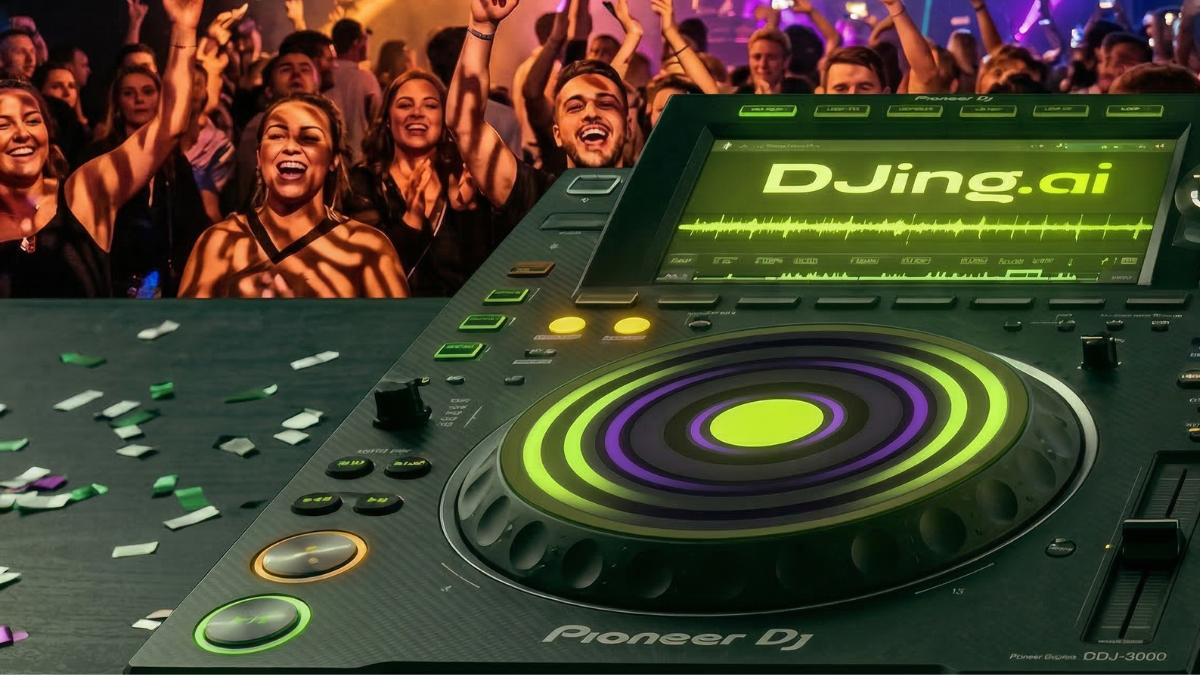
- DJ Controller: A good hardware controller (Pioneer DDJ series, Native Instruments Traktor Kontrol, Denon DJ Prime) gives you tactile control over crucial elements. Jog wheels, faders, performance pads. Your hands still connect to the music, even if your AI is suggesting the next move. It lets you override, tweak, add your human touch.
- MIDI Controllers: For more advanced AI control, a dedicated MIDI controller with assignable knobs and pads is amazing. Map specific AI parameters to physical controls. Imagine turning a knob to increase the “surprise factor” of your AI’s next track choice, or pressing a pad to trigger an AI-generated beat loop. It’s interactive, it’s dynamic.
My favorite moment with a controller? I was testing a new AI model, and it kept pulling in a specific vocal sample at the perfect time. I mapped that sample to a pad on my controller. Now, I could still let the AI surprise me, but I also had direct access to that crowd-pleasing element. It wasn’t about the AI replacing me; it was about it making me even better!
The Library: Your Music, Your AI’s Fuel
This seems obvious, right? But your music library is absolutely critical. Your AI is only as good as the data it’s trained on, and your personal library is its most immediate dataset. Clean, well-tagged music is non-negotiable.
- High-Quality Audio Files: Stick to WAV, AIFF, or high-bitrate FLAC/MP3 (320kbps). Garbage in, garbage out. Your AI can’t make a lo-fi track sound pro.
- Organized & Tagged: Genre, artist, BPM, key, mood tags. The more metadata your tracks have, the smarter your AI can be. Spend time on this! It’s tedious, yes, but it pays dividends.
- Variety is Key: Don’t just feed it one genre. Expose your AI to a wide range of music. It helps it understand transitions between different styles, anticipate mood changes, and broaden its creative horizons.
I learned this lesson the hard way. My initial AI was terrible at mixing genres. Turns out, my library was heavily skewed towards just a few sub-genres of techno. Once I diversified and cleaned up the tags, its ability to weave different vibes together became uncanny. It literally learned to bridge gaps in musical styles, all thanks to better data.
Connecting It All: The Network and the Power
Don’t forget the boring but essential stuff! A stable power supply for all your gear, and clean, high-quality audio cables (RCA, XLR, USB for controllers) are vital. And, if you’re like me and experimenting with cloud-based AI processing or remote control, a rock-solid internet connection or local network is a must.
It’s a journey, not a destination. Building your AI DJ setup isn’t a one-and-done project. It’s an evolving beast. You’ll upgrade components, swap out software, experiment with new AI models. That’s the fun of it! Every tweak, every new piece of gear, every line of code you understand (or pay someone to write!), pushes the boundaries of what you can create. It’s about empowering your creativity, pushing your boundaries, and having a blast while doing it. Don’t let anyone tell you this isn’t real DJing. This is the next frontier. So, get out there, build your dream setup, and let that AI sing!
For those wondering about the bigger picture, and perhaps a touch of controversy, consider how Will AI Replace Human DJs? Debunking the Myths touches on some of the philosophical considerations here. And if you’re keen to dive deeper into the nuts and bolts of the AI itself, check out this fascinating research on AI music generation from ACM Digital Library. Or explore the latest developments in GPU-accelerated computing for creative tasks, as discussed by experts at NVIDIA’s AI Art Blog. These resources really show where the tech is heading!
Ready to build? I sure hope so. The dance floor awaits your AI’s masterful touch!