
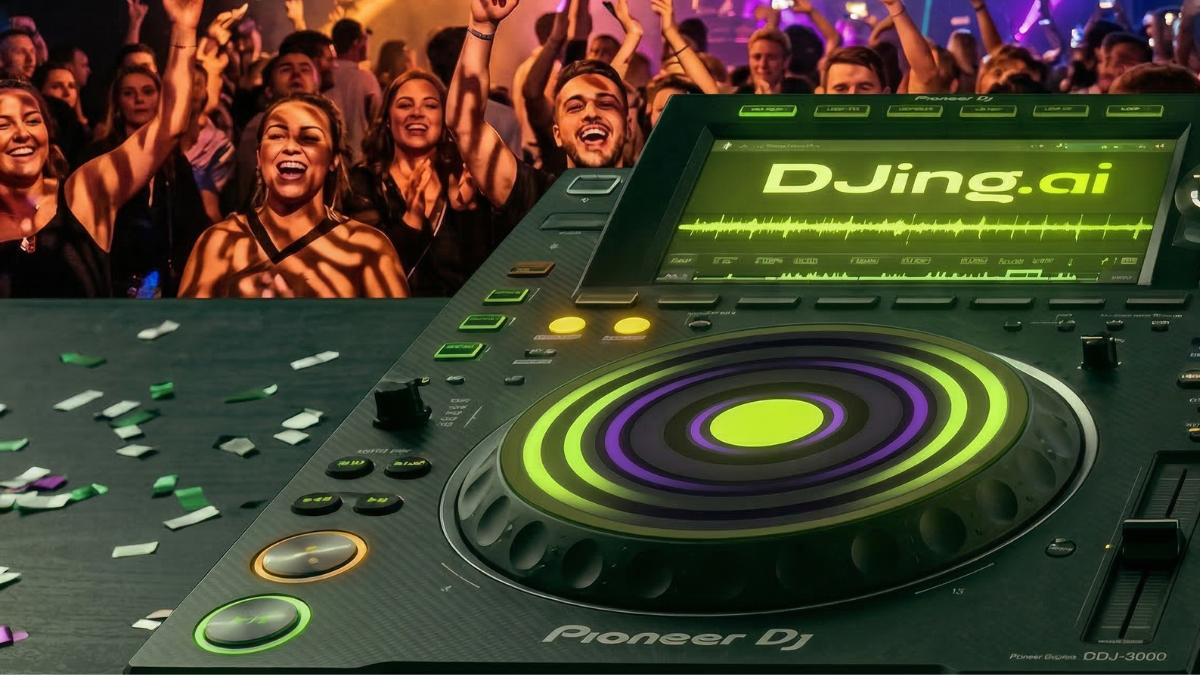
You guys, 2026 is WILD! Seriously, if you told me ten years ago we’d be talking about artificial intelligence stepping onto the decks, I’d have laughed you out of the booth. “AI DJing?” I’d scoff. “Never!” But here we are. And let me tell you, it’s not what you think. It’s better. Much, much better.
This isn’t some dystopian future where robots steal our gigs. No way. This is about pure, unadulterated musical freedom, about pushing boundaries, about having a tool so powerful it makes your creative juices absolutely explode. For anyone still scratching their head about what this buzz is all about, let’s dive headfirst into The Dawn of AI DJing: An Introduction. Trust me, you’re gonna want to hear this.
So, What Even IS AI DJing?
Alright, let’s get real. Forget your Spotify “Daily Mix.” That’s baby stuff. AI DJing is like having a co-pilot who has digested every beat, every melody, every crowd reaction ever recorded. It’s an intelligent system that doesn’t just play tracks. It understands them. It understands *you*. And it understands the flow of a night.
When I first heard the term, my old-school brain screamed, “Sacrilege!” My fingers, calloused from years of vinyl and battling dodgy club mixers, just didn’t get it. But then I saw it in action. A friend, a total tech wizard, was messing around with a beta version of some AI DJ software. He just fed it a few starting tracks, set a vibe, and walked away. And it built an entire set. A seamless, mood-shifting, genre-bending set that kept people glued to the dance floor. My jaw hit the floor. This wasn’t just a playlist. This was *something else*. It was like the algorithm had a soul. Or at least, a damn good sense of rhythm and timing!
Basically, AI DJing means a computer program, powered by advanced algorithms, takes on some or all of the tasks a human DJ would do. This includes selecting tracks, beat-matching them perfectly, mixing them together smoothly, and even adjusting the energy of the set based on various inputs. It’s like having the world’s most diligent, mathematically precise assistant. One who never spills a drink on the equipment.
How Does This Magic Happen? The Nuts and Bolts (Kind Of!)
Alright, how does this digital sorcery actually work? It’s not a single trick, it’s a whole suite of amazing technologies working in concert. Think of it as a super-powered digital brain.
Here are the core pieces:
- Deep Dive Music Analysis: This is where it all starts. The AI doesn’t just see a song title. It tears that track apart. It analyzes BPM (beats per minute), key, harmonic structure, energy levels, genre, timbre, vocal presence, and even how “danceable” a track is. Every single sonic detail gets cataloged. It’s like it has X-ray vision for sound! This data forms the bedrock of every decision it makes.
- Recommendation Engines on Steroids: Remember those basic algorithms that suggest “songs like this”? This goes way beyond. Based on its deep analysis, user preferences (yours!), and even real-time data if available (like crowd movement or current mood tags), the AI predicts what track should come next. It’s not just about matching BPM. It’s about maintaining energy, telling a story, and building a journey. Plus, if you’re like me, constantly trying to find those hidden gems, this feature is gold. It introduces you to tracks you might never find otherwise!
- Real-Time Mixing Mastery: This is where the performance aspect comes in. The AI handles the actual mixing. We’re talking perfect beat-matching every single time. It automatically aligns the beats, adjusts the EQ to blend frequencies seamlessly, and executes transitions that flow like silk. No more awkward cuts or clashing keys! Some advanced systems even incorporate dynamic looping, hot cues, and effects. It’s ridiculously precise. For us humans, it means less time worrying about the technical stuff and more time focused on the creative vision.
- Machine Learning and Feedback Loops: This is the secret sauce. The “AI” part isn’t static. It learns. Every time it plays a set, every time a human DJ tweaks its suggestions, every time it gets feedback (explicit or implicit), it gets smarter. It refines its understanding of what makes a good mix, what tracks complement each other, and what builds a great vibe. It’s a continuous learning process. This is the heart of The Fundamentals of Machine Learning for DJs – how these systems actually get better over time.
When I first started dabbling, I thought I’d lose that “human touch.” But what I found was the opposite. I started using AI as a brainstorming partner. I’d feed it my current crate, tell it the mood, and watch it spit out sequences I never would have dreamed of. It pushed my own creative boundaries! It lets me experiment with mixing styles I’d be too nervous to try live. It’s a rehearsal room, a research assistant, and a second pair of golden ears all rolled into one.
It’s About Augmentation, Not Replacement (Seriously!)
Now, I know what some of you are thinking. “But what about the soul? What about the feel of the crowd?” And you’re right to ask! That human connection, that ability to read a room, to spontaneously switch genres because you saw someone’s face light up – that’s irreplaceable. Right now, in 2026, AI can’t replicate that nuanced, intuitive human empathy.
But here’s the kicker: it’s not trying to.
Think of AI DJing as a powerful, incredible assistant. It handles the technical grind. It takes care of the perfect beat-match, the harmonic consistency, the endless track digging. This frees us up! It gives us back the mental bandwidth to focus on the truly human elements: feeling the vibe, connecting with the crowd, telling a deeper story with the music.
I remember a crazy gig last year. A sudden downpour turned an outdoor festival into a mud pit. The energy was dropping fast. My AI was pre-programmed for sunshine vibes, but I could quickly override it. I grabbed the controls, switched to some gritty, high-energy drum and bass, and the crowd went wild. The AI kept the transitions smooth while *I* focused on injecting that raw human energy. It was a partnership! The best of both worlds.
This technology allows us to experiment more, discover new sounds faster, and even practice new techniques without the pressure of a live audience. Plus, for those of us who also produce music, it can even inspire new track ideas by showing us unexpected ways songs can blend. It’s truly a creative spring.
The Future is Now (And It’s Exciting!)
We’re just scratching the surface here. The algorithms are constantly getting better at understanding musical context, at identifying subtle shifts in energy, and at predicting human preferences. We’re seeing AI systems that can adapt their sets based on real-time crowd feedback (anonymized data, of course!), or even generate unique tracks on the fly. The distinction between From Playlists to Algorithms: The Evolution of Music Curation is blurring more every day.
Some purists might still balk. They always do. They balked at vinyl dying, then at CDJs, then at laptops. Change is scary! But AI DJing isn’t about replacing the magic. It’s about giving us new wands, new spells, and new ways to conjure that magic. It’s a tool, a powerful one, to help us explore the limitless possibilities of sound.
So, if you’ve been curious, if you’ve been wondering, or if you’ve been hesitant, I say this: jump in! Try it! Play with it. See how it can spark new ideas, streamline your workflow, or just plain blow your mind with what’s possible. It might just change the way you think about DJing forever. The future of music is calling, and it’s got a killer beat. Don’t miss out on the party!
For more deep dives into the technical aspects and the incredible potential of this field, check out some fantastic resources online: